 BTC
 ETH
 SOL
 XRP
 BNB
 DOGE
 ADA
 AVAX
 LINK
 TON
 DOT
 LTC
 TRX
 POL
 USDT
 USDC
 SUI
 HBAR
 SHIB
 BCH
 XLM
 NEAR
 APT
 ARB
Grayscale says stablecoin outflows and AI stocks drove crypto sell-off
Grayscale attributes Bitcoin's 17% November slide to stablecoin outflows and weak AI stocks, and says its indicators now show oversold conditions.
Why it matters: It gives traders a measurable explanation for the fall, linking crypto prices to stablecoin supply and AI stock moves rather than a single event.

Reviewed and fact-checked by Jayshree Majumdar on 17 Nov 2026
In short
- Grayscale said the November crypto sell-off was driven by stablecoin supply declines and weakness in AI stocks, not one single event.
- Bitcoin fell about 17% to about $64,000 in the first two weeks of November, while Grayscale's Crypto Sectors index lost about 18%.
- Stablecoin supply fell faster after the Binance hack on 29 October, and Nvidia's weakness hit growth portfolios holding crypto.
- Grayscale called valuations oversold and attractive for medium- to long-term investors, while flagging inflation and Fed rate risk.
Grayscale said the crypto market's sharp November sell-off was driven mainly by a drop in stablecoin supply and weakness in AI-related stocks, not by a single shock. In its report The Stack, published on 16 November 2026, the crypto asset manager said Bitcoin fell about 17% to about $64,000 in the first two weeks of November, while its market-cap-weighted Crypto Sectors index lost about 18%. At the time of writing (04:31 UTC on 17 November 2026), Bitcoin (BTC) traded at $64,785, up 0.26% in 24 hours, with a market value of $1.3tn, according to InvestIn.News market data.
Why does Grayscale blame stablecoins and AI stocks?
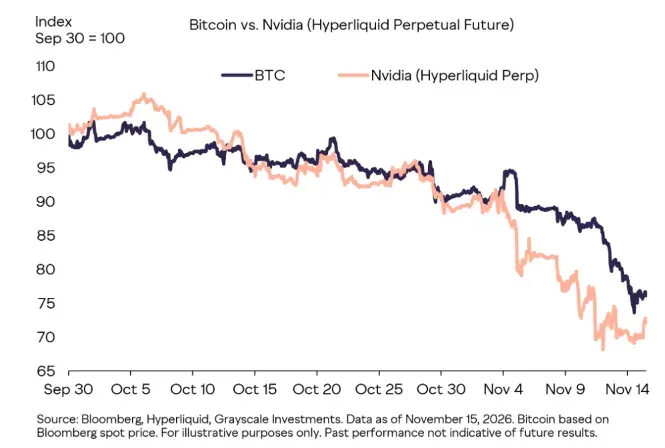
Grayscale said two main dynamics drove the fall. First, stablecoin supply shrank as investors moved funds back to fiat, possibly because exchange security fears rose after the Binance hack on 29 October. Circle's USDC supply began declining in early October, and Tether's USDT traded below $1 shortly afterwards, according to the report. The decline in USDT and other stablecoins sped up after the Binance hack, BlockBeats reported. Second, pressure on Nvidia and other AI-related equities likely pushed growth portfolios that hold tech stocks and digital assets to cut risk, and that spilled over to Bitcoin infrastructure and spot prices, Grayscale said.
How technical factors deepened the fall
Technical factors deepened the decline, according to TokenPost. Bitcoin broke below its 200-day moving average on 12 November, a level trend-following funds often read as a sell signal. Falling prices then triggered liquidations of leveraged positions in perpetual futures. Grayscale said much of the selling happened over a weekend, when order book depth was lower, so price moves had an outsized effect. Odaily reported that Zach Pandl, Grayscale's head of research, put Bitcoin's low in the first half of November at $62,000.
How oversold is the crypto market?
The broader crypto market was also under strain. Total crypto market value stood at $2.22tn, up 1.08% in 24 hours, and the Crypto Fear & Greed Index was at 12 of 100, labelled Extreme Fear, according to InvestIn.News market data. Grayscale's proprietary indicators swung from overbought to oversold during the first two weeks of November, the report said, and that's why the firm sees current prices as an attractive entry point for medium- to long-term investors.
What Grayscale's call means for crypto traders
For crypto holders and traders, the report explains the fall as a shift in risk appetite rather than a single hack or company failure. Traders can watch stablecoin supply and Bitcoin's 200-day moving average, because Grayscale says both signalled the sell-off. The main caveat is that the oversold call is one asset manager's assessment, not a market fact. Grayscale itself lists uncertainty around AI investment, high inflation, possible further Federal Reserve rate hikes, and geopolitical conflict as ongoing risks, according to BlockBeats.
Grayscale argued the drawdown had little to do with the planned Anthropic IPO or pressure on Strategy, the largest digital asset treasury company. Strategy's STRC preferred product continued to trade near par, the report said. The firm sees favourable fundamentals such as institutional adoption of stablecoins and tokenised assets, and says current prices represent an attractive entry point for investors with medium- or long-term horizons, according to TokenPost.
Key numbers
| What | Figure |
|---|---|
| Bitcoin fall in first two weeks of November | about 17% to about $64,000 (Grayscale) |
| Grayscale Crypto Sectors index fall | about 18% (November) |
| Bitcoin low reported by Odaily | $62,000 (first half of November) |
Timeline
- 29 Oct 2026: Binance hack; stablecoin supply decline accelerated
- 12 Nov 2026: Bitcoin fell below 200-day moving average
- 16 Nov 2026: Grayscale published The Stack report
Questions readers ask
Why is Bitcoin dropping right now?
Grayscale says Bitcoin's November drop reflected stablecoin outflows and weakness in AI stocks such as Nvidia, not one single shock. Stablecoin supply fell faster after the Binance hack on 29 October, and Bitcoin broke below its 200-day moving average on 12 November, which deepened selling. Grayscale's report, published on 16 November, put the drop at about 17%, and Bitcoin traded at $64,785 at 04:31 UTC on 17 November, according to InvestIn.News market data.
Is Grayscale Bitcoin a good buy?
Grayscale called current crypto valuations attractive for medium- to long-term investors, citing institutional adoption of stablecoins and tokenised assets. But that is one asset manager's assessment, and Grayscale also flagged risks from high inflation, possible further Federal Reserve rate hikes, and geopolitical conflict.
What does an oversold crypto market mean?
Grayscale said its proprietary indicators swung from overbought to oversold in the first two weeks of November, meaning prices fell quickly relative to recent trading. The firm sees this as a potential entry point for longer-term investors, not a guarantee of an immediate rebound.
Our view
At InvestIn.News, we think Grayscale has correctly identified two structural drivers behind the fall. The contraction in stablecoin supply, especially after the Binance hack, removes dry powder that usually supports Bitcoin, and the weakness in Nvidia and other AI stocks matters because growth portfolios often hold crypto and tech together. We share Grayscale's view that digital asset fundamentals remain supportive, given institutional adoption of stablecoins and tokenised assets. But we would treat the oversold call as one manager's opinion rather than a market fact, because Grayscale itself lists meaningful macro risks, high inflation, the possibility of further Federal Reserve rate hikes, and geopolitical conflict. The view would strengthen if stablecoin supply stabilises and AI stock volatility eases.
How we reported this: this story draws on reporting by BlockBeats, Grayscale, tokenpost.com and Odaily and InvestIn.News market data. Each source is linked in the text and listed under Sources.
Follow the latest news as it breaks on Stablecoins NewsFeeds.
Sources
- BlockBeats: Grayscale Research Head: Significant Crypto Market Correction May Offer Entry Opportunities for Medium- to Long-Term Investors
- Grayscale: The Stack
- tokenpost.com: Grayscale Says Crypto Valuation Indicators Shifted to Oversold | TokenPost
- Odaily: Grayscale's Zach Pandl says crypto valuations swung from overbought to oversold
- m.odaily.com.cn: Machi Big Brother closes Bitcoin long position for profit, Ethereum long turns from loss to gain
- ChainCatcher: Grayscale Research Director: Cryptocurrency...
- CryptoPanic: Grayscale: Multiple Factors Have Turned Crypto Valuations Oversold; Current Levels Are a Medium- to Long-Term Buying Opportunity for Bitcoin
- bitpush.news: Grayscale Research Director: Crypto asset valuations have rapidly moved from overbought to oversold, and current prices are attractive
- 深潮TechFlow: Grayscale Head of Research: Crypto Asset Valuations Turn Oversold, Presenting Mid-to-Long-Term Entry Opportunities
- InvestIn.News market data
Live updates on NewsFeeds:BitcoinStablecoinsBy Keshav Aggarwal
Disclosure: Keshav Aggarwal holds small amounts of crypto as long-term investments. He does not trade any asset he writes about within 24 hours of a story, and is not paid by any company covered on this site, updated 6 October 2026. Our holdings and trading policy.
How this was produced: the writer drafted this piece with AI help, from the reporting and sources it names, then checked and edited it. Read our Editorial and AI policy. Spotted a mistake? See Corrections.
Not investment advice. Read the risk disclaimer.