 BTC
 ETH
 SOL
 XRP
 BNB
 DOGE
 ADA
 AVAX
 LINK
 TON
 DOT
 LTC
 TRX
 POL
 USDT
 USDC
 SUI
 HBAR
 SHIB
 BCH
 XLM
 NEAR
 APT
 ARB
Bitcoin falls below $70,000 as Fed rate bets and ETF outflows hit crypto
Bitcoin slid to a three-month low on 13 November 2026 as traders priced in a December rate rise and pulled money from US spot Bitcoin ETFs. Long bets worth more than $1bn were liquidated.
Why it matters: Bitcoin's slide below $70,000 shows how quickly a Fed rate bet and ETF outflows can hit crypto, and what that means for anyone holding or trading it.

Reviewed and fact-checked by Jayshree Majumdar on 13 Nov 2026
In short
- Bitcoin fell below $70,000 on 13 November 2026, hitting a three-month low near $68,500.
- Hot October inflation data raised bets on a 25 to 50 basis point Fed rate rise in December.
- US spot Bitcoin ETFs saw more than $2.5bn in net outflows between 30 October and 11 November.
- More than $1bn of leveraged long positions were liquidated after the break below $70,000.
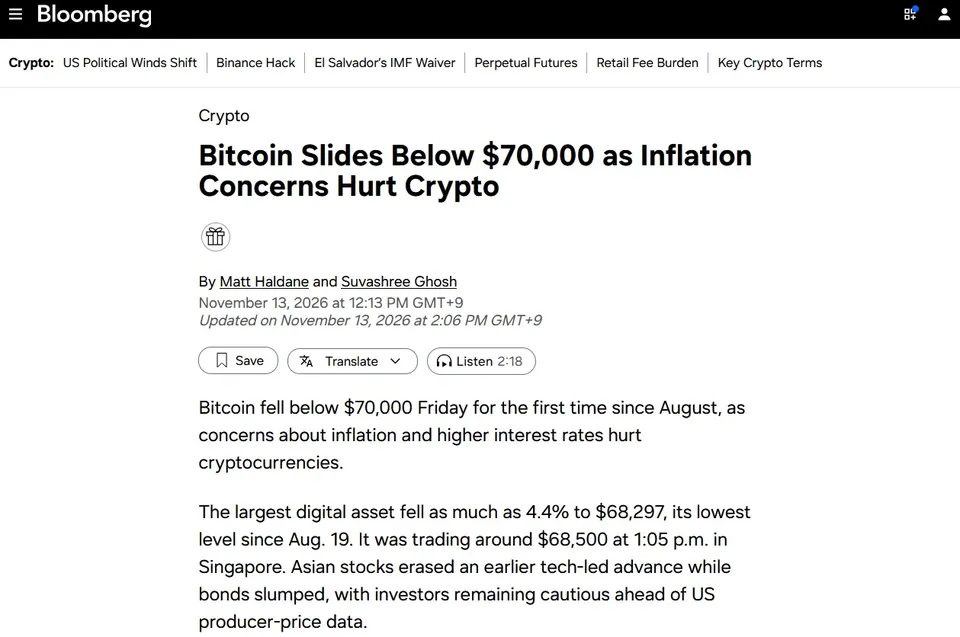
Bitcoin fell below $70,000 on Friday 13 November 2026, hitting its lowest level in about three months, as expectations of another US interest rate rise and a weaker appetite for risk weighed on crypto, according to Bloomberg, as carried by Moneyweb. The largest cryptocurrency dropped as much as 4.4% to $68,297 during the day, according to Tiger Brokers, and was trading near $68,500 at the time of that report. Other outlets carried the same move: NDTV Profit said Bitcoin fell below $70,000 for the first time since August, and Trading Economics put the drop at more than 3% to its lowest level since mid-August.
At the time of writing (06:39 UTC on 13 November 2026), Bitcoin (BTC) traded at $68,851, down 6.31% in 24 hours, with a market value of $1.38tn, according to InvestIn.News market data. The total crypto market was worth $2.34tn, down 5.3% over the same period, and the Crypto Fear & Greed Index stood at 20 of 100, in "Extreme Fear" territory.
Bitcoin is the first and largest cryptocurrency, a digital asset that trades around the clock on exchanges and is often treated by investors as a speculative bet on risk appetite. Its move below $70,000 came as part of a wider slide across crypto: Ethereum (ETH) traded at $1,934, down 5.35% in 24 hours, with a market value of $236bn, according to InvestIn.News market data.
Why did Bitcoin fall below $70,000?
The trigger was macro, not crypto-specific. US consumer inflation data for October came in hotter than expected, with the core Consumer Price Index, which strips out food and energy, up 0.3% month on month for the third month in a row, Tiger Brokers reported. Markets responded by pricing in a 25 to 50 basis point rate rise at the Federal Reserve's December meeting, according to CME FedWatch data cited by Yahoo. Higher rates tend to pull money away from speculative assets like crypto and into safer bets such as government debt.
Rich Rosenblum, co-founder of crypto market maker GSR, pointed to swings in the artificial intelligence trade, a firmer dollar and a change of leadership at Nvidia as pressures on risk assets, according to Bloomberg. Sean McNulty, a derivatives trader at market-making firm AQC Tech, said more than $1bn in leveraged long positions was forcibly liquidated right after Bitcoin broke below $70,000, which intensified the selling, Bloomberg reported. Tiger Brokers, citing CoinGlass data, put the figure at over $1.2bn of crypto long bets liquidated within 24 hours.
ETF outflows and the Congress factor
Institutional buyers have also stepped back. US-listed spot Bitcoin ETFs, funds that hold Bitcoin and trade like shares, recorded more than $2.5bn in net outflows between 30 October and 11 November, according to Trading Economics, marking a second consecutive week of withdrawals. That matters because ETFs have been one of the main channels through which large investors get exposure to Bitcoin.
Politics increased the strain. Trading Economics reported that the Democrats' win in November's midterms, handing them both chambers of Congress from next year, has fuelled expectations of closer scrutiny of crypto. Yahoo noted that several senior Democrats have urged stricter anti-money laundering and risk-management standards for the sector.
What the drop means for crypto holders
What does this mean for everyday crypto investors? If you hold Bitcoin or other tokens, the decline is genuine, but it reflects a market move rather than a network or exchange failure. The key issue is your own leverage: if you borrow to trade, a 6.3% fall in a day can erase a position, as the forced sales reported on 13 November show. For long-term holders, the number to watch is ETF flow data, which show whether large investors are continuing to withdraw.
Bitcoin briefly fell below $70,000 to a fresh three-month low even as Asian stocks advanced, as rising bond yields hurt non-yielding assets such as cryptocurrencies https://t.co/eM43RsoRFd
 Bloomberg @business · · View on X
Briefly? Still falling
 The Green Bull @Green_Bull_X · · View on X
My crypto wallet and my sleep schedule both bottomed out this week.
 moumoubin @moumoubin_inx · · View on X
So much for Bitcoin being completely detached from traditional markets. Rising bond yields are hitting crypto just like other risk-sensitive assets.
 Sean A-Johnson @pepisky · · View on X
Key numbers
| What | Figure |
|---|---|
| Bitcoin low on 13 November 2026 | $68,297 |
| Bitcoin 24-hour fall at 06:39 UTC | 6.31% |
| US spot Bitcoin ETF net outflows, 30 Oct-11 Nov | more than $2.5bn |
| Liquidated crypto long bets in 24 hours (CoinGlass) | over $1.2bn |
Timeline
- 30 Oct 2026: Start of $2.5bn net outflow run from US spot Bitcoin ETFs
- 11 Nov 2026: End of the ETF outflow period reported by Trading Economics
- 13 Nov 2026: Bitcoin falls below $70,000 to a three-month low
Questions readers ask
Why did Bitcoin fall below $70,000 on 13 November 2026?
Bitcoin fell below $70,000 on 13 November 2026 after hotter-than-expected US inflation data raised bets on a Federal Reserve rate rise in December, according to Yahoo and Trading Economics. US spot Bitcoin ETFs also saw more than $2.5bn in net outflows between 30 October and 11 November, and more than $1bn of leveraged long positions were liquidated, Bloomberg reported.
How much did Bitcoin drop on 13 November 2026?
Bitcoin fell as much as 4.4% to $68,297 during 13 November 2026, according to Tiger Brokers, its lowest level since August. At 06:39 UTC it traded at $68,851, down 6.31% in 24 hours, with a market value of $1.38tn, according to InvestIn.News market data. NDTV Profit reported it was the first drop below $70,000 since August.
Are US spot Bitcoin ETFs losing money?
US-listed spot Bitcoin ETFs recorded more than $2.5bn in net outflows between 30 October and 11 November 2026, according to Trading Economics, a second consecutive week of withdrawals. That means more money left these funds than entered them over the period, a sign that institutional buyers have turned cautious on Bitcoin.
Our view
At InvestIn.News, we see the fall below $70,000 as a macro-driven move rather than a crypto-specific breakdown. The trigger was the October inflation data, which kept the core Consumer Price Index up 0.3% month on month for a third month, and the market's response: a 25 to 50 basis point Fed rate rise priced in for December, according to CME FedWatch data cited by Yahoo. When safer assets like government debt pay more, speculative assets like Bitcoin feel it first.
The second force is institutional retreat. US spot Bitcoin ETFs lost more than $2.5bn between 30 October and 11 November, according to Trading Economics, a second straight week of withdrawals. That is the channel through which large investors express caution, and it explains why the drop was sharp rather than gradual.
The political backdrop adds uncertainty but is not the main driver. Democratic control of Congress from next year has raised expectations of tougher crypto rules, Trading Economics reported, yet the selling began with the inflation data. We would watch the December Fed meeting and the next weekly ETF flow figures: a pause in rate expectations or a return of inflows would be the concrete sign that this slide has run its course.
How we reported this: this story draws on reporting by Yahoo, NDTV Profit, Trading Economics and Tiger Brokers, 4 public posts shown in the story and InvestIn.News market data. Each source is linked in the text and listed under Sources.
Follow the latest on ETFs NewsFeeds as the news breaks.
What to watch: The Federal Reserve's December meeting, where markets expect a 25 to 50 basis point rate rise, is the next scheduled event that could shift the picture.
Sources
- Yahoo: Bitcoin drops below $70k as crypto appetite sours
- NDTV Profit: Bitcoin Price Slide Below $70,000 As Inflation Concerns Hurt Crypto
- Trading Economics: Bitcoin Falls to 3-Month Low
- Tiger Brokers: Bitcoin Falls Below $70,000 as Inflation Fears Weigh on Crypto Market
- Bloomberg (@business): Post
- The Green Bull (@Green_Bull_X): Post
- moumoubin (@moumoubin_inx): Post
- Sean A-Johnson (@pepisky): Post
- Followin: Bloomberg says BTC falls below $70K amid inflation fears, regulatory pressure
- KuCoin: Bitcoin Drops Below $70,000 Amid Inflation and Regulatory Concerns | KuCoin
- InvestIn.News market data
Live updates on NewsFeeds:BitcoinBy Keshav Aggarwal
Disclosure: Keshav Aggarwal holds small amounts of crypto as long-term investments. He does not trade any asset he writes about within 24 hours of a story, and is not paid by any company covered on this site, updated 6 October 2026. Our holdings and trading policy.
How this was produced: the writer drafted this piece with AI help, from the reporting and sources it names, then checked and edited it. Read our Editorial and AI policy. Spotted a mistake? See Corrections.
Not investment advice. Read the risk disclaimer.