 BTC
 ETH
 SOL
 XRP
 BNB
 DOGE
 ADA
 AVAX
 LINK
 TON
 DOT
 LTC
 TRX
 POL
 USDT
 USDC
 SUI
 HBAR
 SHIB
 BCH
 XLM
 NEAR
 APT
 ARB



Ethereum Foundation says AI is a more urgent risk than quantum computing
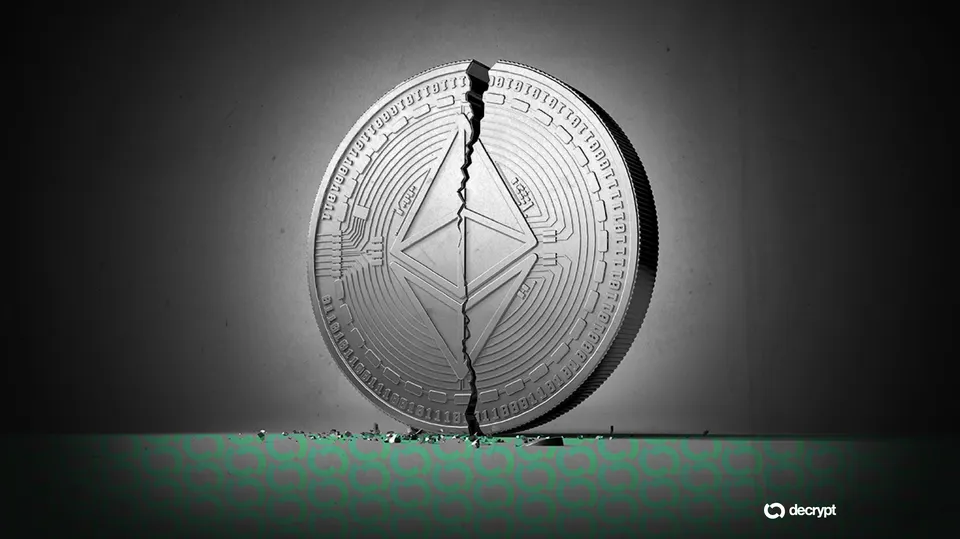
The Ethereum Foundation has doubled its protocol security team and made stronger cryptography its top priority, warning that AI could break the maths behind the network sooner than quantum machines.
Why it matters: The Foundation is reworking the cryptography that secures wallets, validators and layer-2 data across the network, a change it says could be harder than the 2022 Merge.

Key points
- The Foundation is moving Ethereum from elliptic curve cryptography to hash-based cryptography, affecting wallets, validators and layer-2 data checks.
- Ethlabs has withdrawn its faster block production proposal for the Hegotá upgrade to free engineers for the work, with a timeline reassessment due in January 2027.
The Ethereum Foundation has made stronger cryptography its highest priority and doubled its protocol security team, warning that AI is a more urgent risk than quantum computing. In a blog post published on 23 November, Kev Wedderburn wrote that the Foundation had been planning defences against quantum machines but that AI had recently become the more pressing concern.
The industry has long worried about Q-Day, the point at which quantum computers could break the cryptography protecting digital assets. AI raises a different problem: someone could find a mathematical shortcut that removes the need for such a machine. Bitcoin and Ethereum both use elliptic curve cryptography, whose security rests on problems that are easy to solve one way and prohibitively hard to reverse.
Ethereum's answer is to move to hash-based cryptography, which relies on fewer structural mathematical assumptions. The change would affect how users authorise transactions, how validators secure the network and how Ethereum checks data from layer-2 networks. Developers are also using formal verification and have deployed AI agents against their own infrastructure to find vulnerabilities first.
The overhaul has costs. Some planned features must be reconsidered and larger signatures could raise hardware requirements for node operators. The Foundation had set December 2029 as its internal deadline for quantum resistance, and researcher Justin Drake proposed bringing that forward to December 2028 at Devcon in Mumbai.
Live updates on NewsFeeds:EthereumAIFrom our AI Hub: Is ChatGPT, Claude or Gemini down?, AI API prices, new AI modelsDesk editor: Keshav Aggarwal (accountable for this page; this summary was not edited by hand)
How this was produced: an AI model wrote this summary of Decrypt’s report, which we credit and link above. Read our Editorial and AI policy. Spotted a mistake? See Corrections.
Not investment advice. Read the risk disclaimer.


