 BTC
 ETH
 SOL
 XRP
 BNB
 DOGE
 ADA
 AVAX
 LINK
 TON
 DOT
 LTC
 TRX
 POL
 USDT
 USDC
 SUI
 HBAR
 SHIB
 BCH
 XLM
 NEAR
 APT
 ARB
Chainalysis says Eastern Europe crypto activity fell 7.9% in year to June 2026
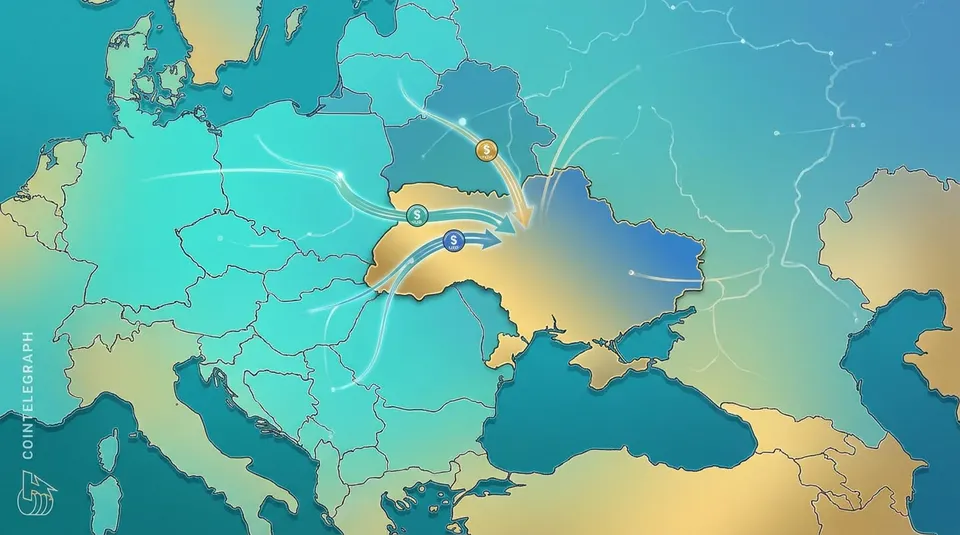
Eastern Europe posted the steepest regional decline in crypto activity tracked by Chainalysis, with its crypto economy shrinking to $642bn, while Ukraine received $12bn in cross-border stablecoin transfers.
Why it matters: The data shows how war-driven cross-border stablecoin transfers to Ukraine persist even as overall crypto activity in Eastern Europe contracts sharply.

Key points
- Eastern Europe's crypto economy fell 7.9% to $642bn in the year to June 2026, against a 1.6% global decline.
- Russia, about 44% of the regional total, saw activity drop 14.7% to $284bn, while Belarus grew 27.6%.
- Ukraine received $12bn in cross-border wallet-to-wallet stablecoin transfers, including $2.41bn in retail-sized amounts.
Eastern Europe recorded the steepest fall in crypto activity of any region in Chainalysis's tracking, according to a report published on 17 November. The firm's data shows the region's crypto economy shrank 7.9% to $642bn in the year ended June 2026, against a 1.6% decline globally.
Belarus grew 27.6%, while Bulgaria, Moldova and Ukraine posted smaller increases. Transfers of $10,000 or more to crypto services dropped 17.4% in value, from $592bn to $489bn, even as smaller transfers rose 8.3%.
Crypto ATM volumes nearly doubled to $33.9m from $17.3m, with Poland up 120% despite a 5% fall in centralised exchange activity; stablecoins made up about 90% of Polish ATM transactions.
A Chainalysis spokesperson told Cointelegraph the flows were largely in US dollar-pegged stablecoins.
Live updates on NewsFeeds:StablecoinsDesk editor: Keshav Aggarwal (accountable for this page; this summary was not edited by hand)
How this was produced: an AI model wrote this summary of Cointelegraph’s report, which we credit and link above. Read our Editorial and AI policy. Spotted a mistake? See Corrections.
Not investment advice. Read the risk disclaimer.