SEC's Hester Peirce backs zero-knowledge proofs for KYC reform
Outgoing SEC commissioner Hester Peirce wants data-heavy surveillance replaced with zero-knowledge proofs, a shift World Foundation's Remco Bloemen says needs a regulatory sandbox first.
Key points
- Peirce called for replacing continuous personal-data collection with zero-knowledge proofs and attribute-based credentials at a SIFMA event.
- She said bigger data haystacks make finding the needles harder, warning of a regulatory panopticon.
- Remco Bloemen, head of blockchain at World Foundation, told Bitcoin.com News that ZK proofs could replace significant parts of KYC and AML rules.
- Bloemen said the main missing piece is a clearly defined regulatory sandbox for institutions to test the technology.
- Peirce is set to leave the SEC before the end of the year.
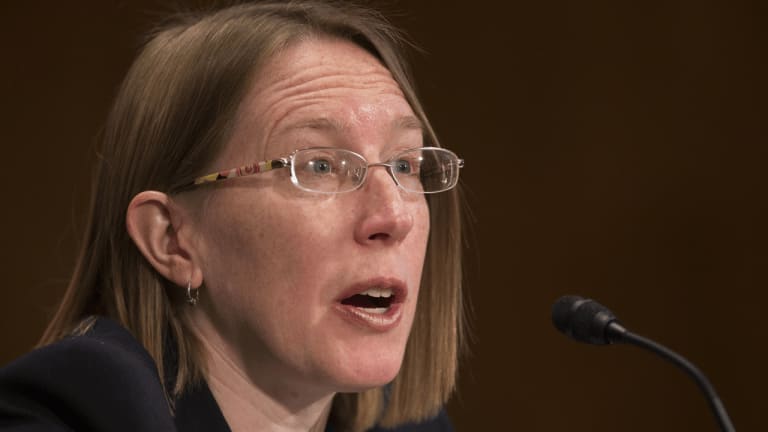
Outgoing Securities and Exchange Commission commissioner Hester Peirce has called for an overhaul of the United States government's financial surveillance framework, Bitcoin.com News reports. Speaking at a Securities Industry and Financial Markets Association event, she argued that mandatory, continuous collection of personal data is costly and largely ineffective at catching criminals. She advocated replacing data-heavy compliance mandates with zero-knowledge proofs and attribute-based credentials.
Peirce challenged the premises behind legacy know your customer and anti-money laundering rules, which require institutions to gather personal data on an ongoing basis. She cautioned that current rules risk turning financial infrastructure into a regulatory panopticon, driven by what she described as data maximalists. In her view, those officials assume that collecting more data improves market integrity, an assumption she rejects.
She used a haystack metaphor to make the point, saying ever bigger data piles are built on the theory that a needle or two will be found inside. The bigger haystack, she added, actually makes the needles harder to find. Every piece of confidential business and personal data collected also creates significant risks of mishandling or breaches, imposing large costs on compliant institutions and ordinary Americans alike.
Peirce challenges KYC premises
Peirce said zero-knowledge technology could cut unnecessary data collection while maintaining and enhancing transparency of the underlying transaction record, though governments and regulators have not widely adopted it. Her call is backed by Remco Bloemen, head of blockchain at World Foundation, who told Bitcoin.com News that zero-knowledge proofs could realistically replace significant parts of traditional KYC and AML rules. Institutions could verify pass or fail attributes without accessing underlying personal data.
The key challenge, Bloemen said, is translating each verification into a precise, computable circuit. That includes clear definitions for complex questions such as aliases in sanctions screening or acceptable evidence of income and assets. While the underlying technical challenges are largely solved, wider adoption would need standardised, legally recognised definitions and reliable data sources, he said, noting production-grade age verification already shows the model can work.
Bloemen said the most important missing piece is a clearly defined regulatory sandbox where institutions can experiment with the technology in close collaboration. Privacy-preserving KYC and AML will have to be battle-tested and case law established before broad adoption is possible, he added. He argued that zero-knowledge identity systems could substantially reduce privacy and security risks by eliminating centralised databases of sensitive KYC information, which he called the primary target of large-scale breaches.
Zero-knowledge proofs at scale
Bloemen considers the underlying technology mature, citing its use in securing billions of dollars, but acknowledges that moving to a new system would bring new risks institutions must identify and manage. Peirce, who is set to leave the SEC before the end of the year, urged the commission and market participants to move toward attribute-based verification. She encouraged allowing registered entities to rely on third-party verification to cut operational costs and reduce cyber vulnerabilities.