 BTC
 ETH
 SOL
 XRP
 BNB
 TON
 DOT
 LTC
 POL
 HBAR
 NEAR
 ARB
 UNI
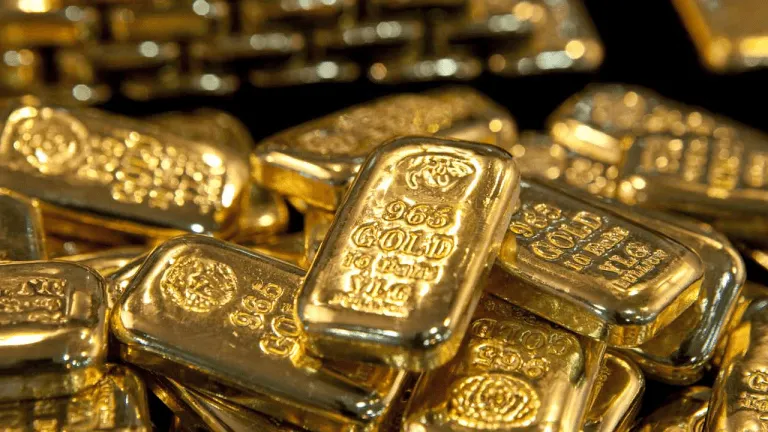
Marathon Fusion says it turned mercury into gold, beating CERN's rate
The San Francisco startup says its nuclear process produced stable gold at ten times CERN's rate, though it has not disclosed output, cost or independent verification. Gold traded near $3,995 an ounce on 23 Oct.

Key points
- Marathon Fusion, founded in 2023, says it converted mercury-198 into gold-197 using high-energy neutrons in a fusion reactor.
- CERN's 2015-2018 lead collisions produced about 86 billion gold nuclei weighing 29 picograms in total.
- Gold closed near $3,995 an ounce on 23 Oct, roughly 26% below its January peak near $5,400 to $5,600.
Marathon Fusion says it has converted mercury into stable gold, a claim that would beat CERN's production rate by ten times. The San Francisco startup, founded in 2023, published gamma-ray measurements it says support the experiment, Bitcoin.com News reports. It has not disclosed how much gold it made, what it cost or whether anyone independently checked the results.
The underlying physics is not new. Marathon's July 2025 research proposed firing high-energy neutrons at mercury-198 inside a fusion reactor to create mercury-197, which decays into gold-197, the stable isotope used in jewellery and central-bank vaults. Its simulations projected about two tonnes of gold a year per gigawatt of thermal fusion power, a theoretical figure rather than demonstrated output.
CERN's microscopic benchmark
The CERN comparison rests on a tiny benchmark. Researchers there reported that lead collisions at the Large Hadron Collider produced roughly 86 billion gold nuclei between 2015 and 2018, with a combined mass of 29 picograms. Ten times that is still only 290 picograms. Neither experiment has shown commercially viable production, and radioactive byproducts and isotope separation remain obstacles.
The claim landed as gold closed near $3,995 an ounce on 23 Oct, about 26% below its January peak, pressured by high Treasury yields, oil prices and expectations of prolonged restrictive Federal Reserve policy. The World Gold Council puts above-ground stocks at about 222,600 tonnes, against mining output of some 3,672 tonnes in 2025. Bitcoin supporters have seized on the news to question gold's scarcity, while gold defenders say theoretical and viable production are different things.
Live updates on NewsFeeds:MacroBitcoinDesk editor: Keshav Aggarwal (accountable for this page; this summary was not edited by hand)
How this was produced: an AI model wrote this summary of Bitcoin.com News’s report, which we credit and link above. Read our Editorial and AI policy. Spotted a mistake? See Corrections.
Not investment advice. Read the risk disclaimer.