US seizes $84m from Capstone over Tether-linked transfers
The DOJ seized $84m from payment processor Capstone, which Tether and Bitfinex used to reach US bank accounts, according to the FT. The case highlights crypto firms' banking access problems.
Key points
- The DOJ seized $84 million from Capstone accounts at Wells Fargo and JPMorgan Chase in a California civil forfeiture case.
- Tether and Bitfinex used Montana-based Capstone to open bank accounts and pay hundreds of individuals and entities, the FT reported.
- Capstone moved over $700 million through its Wells Fargo account, with almost two-thirds said to be for Tether and Bitfinex.
- Tether and Bitfinex admitted being EQIBank customers but denied knowing of any wrongdoing by Capstone.
- EQIBank said the frozen funds are 80% of its holdings and warned it may face liquidation.
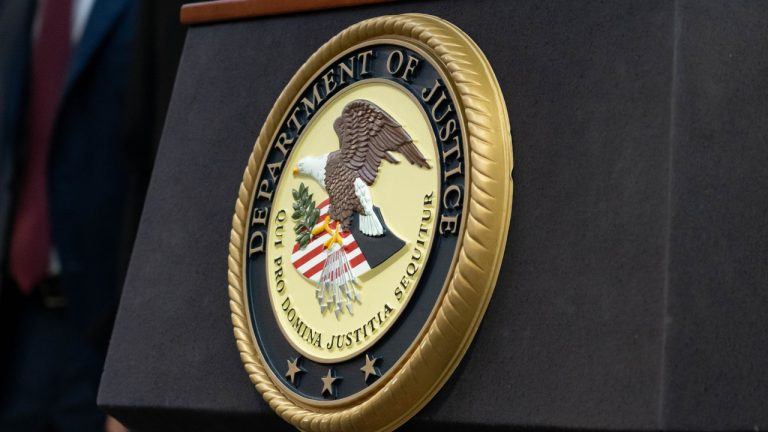
The US Department of Justice has seized $84 million from Capstone, a Montana-based payment processor that Tether and Bitfinex used to reach bank accounts in the United States, according to reporting by the FT cited by Bitcoin.com News. The civil forfeiture order covers Capstone accounts at Wells Fargo and JPMorgan Chase in California.
The FT reported that Tether, the issuer of the USDT stablecoin, and its affiliated exchange Bitfinex relied on Capstone to open bank accounts and settle payments to hundreds of individuals and entities without holding the necessary licences. The report says the arrangement hid the nature of the business, with the company described as an IT services provider.
Capstone was connected to Tether and Bitfinex through EQIBank, a bank registered in Dominica that specialised in online payments and directed Capstone to provide services to the two firms. Tether had invested in the bank and offered to increase its backing if EQIBank could secure the opening of at least one bank account for Tether at Singapore's DBS, according to documents reviewed by the FT.
Seizure and forfeiture order
Prosecutors said Capstone moved more than $700 million through its Wells Fargo account, and that almost two-thirds of that appeared to go to hundreds of individuals and entities on behalf of Tether and Bitfinex. Most of those payments were routed outside the United States, according to the reporting.
Capstone has also been accused of helping convert stolen cash from impersonation fraud schemes targeting elderly people into stablecoins. Tether and Bitfinex acknowledged being customers of EQIBank but denied knowing about any wrongdoing by Capstone as alleged by the DOJ.
The frozen funds represent less than 0.034% of Tether's total assets, but for EQIBank they account for 80% of its holdings, and the bank warned it could face an institutional liquidation process. EQIBank asked for the case to be dismissed, saying it used Capstone because institutions in small jurisdictions struggle to obtain US banking services.
Tether's route to US banks
The case underlines the difficulties crypto companies still face in holding accounts at banks, even after the end of Operation Chokepoint 2.0, and how they turn to third parties and payment processors for access. In May, Tether sued Titan Holding in Brazil after a default on a $300 million loan made by its venture arm, Tether Investments.