 BTC
 ETH
 SOL
 XRP
 BNB
 TON
 DOT
 LTC
 POL
 HBAR
 NEAR
 ARB
 UNI
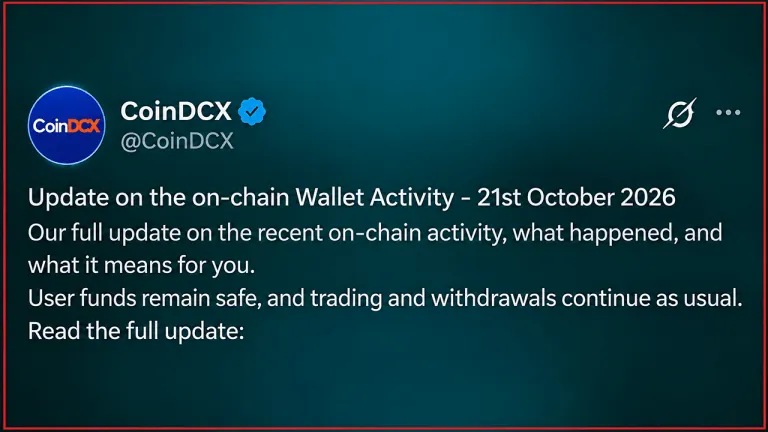
CoinDCX confirms $16m loss after CEO called wallet activity a false alarm
The Indian exchange says 15.99 million USDT drained from retired deposit wallets after an automated transfer system failed, three days after Sumit Gupta dismissed the activity as a false alarm.
Why it matters: The admission renews scrutiny of how exchanges handle deposit addresses tied to earlier breaches, and CoinDCX now puts its losses across two incidents at about $60m.

Key points
- CoinDCX confirmed the 15.99 million USDT loss on 25 Oct, after blockchain observers spotted the transfers on 21 Oct.
- CoinDCX says it absorbed the loss, taking its security losses across 2025 and 2026 to roughly $60m.
CoinDCX has confirmed a loss of nearly $16m from compromised deposit wallets, three days after its chief executive dismissed the suspicious transfers as a false alarm. The Indian exchange said 15.99 million USDT had gone from wallet infrastructure it had already retired, according to Bitcoin.com News.
CoinDCX's account is that some customers kept depositing into obsolete addresses despite warnings, and that an automated system meant to sweep those deposits into secure wallets malfunctioned, letting balances build up. The investigator ZachXBT disputed that explanation, pointing to evidence that some addresses stayed operational months after the July 2025 breach, and Bitquery's analysis found continued wallet activity into October 2026.
The exchange says customer accounts were credited, cold-storage holdings were untouched and trading and withdrawals carried on as normal. It puts its combined security losses for 2025 and 2026 at about $60m, including the $44m breach in July 2025, and says the company absorbed the damage itself.
Live updates on NewsFeeds:StablecoinsDesk editor: Keshav Aggarwal (accountable for this page; this summary was not edited by hand)
How this was produced: an AI model wrote this summary of Bitcoin.com News’s report, which we credit and link above. Read our Editorial and AI policy. Spotted a mistake? See Corrections.
Not investment advice. Read the risk disclaimer.