Bitcoin falls below $83,000 as Iran talks stall and oil nears $108
Bitcoin slid to about $82,600 as stalled Strait of Hormuz talks pushed Brent crude toward $108 a barrel and Treasury yields rose, souring risk appetite across crypto and equities.
Key points
- Bitcoin traded near $82,600 on Monday, down 2% over 24 hours, per CoinDesk data
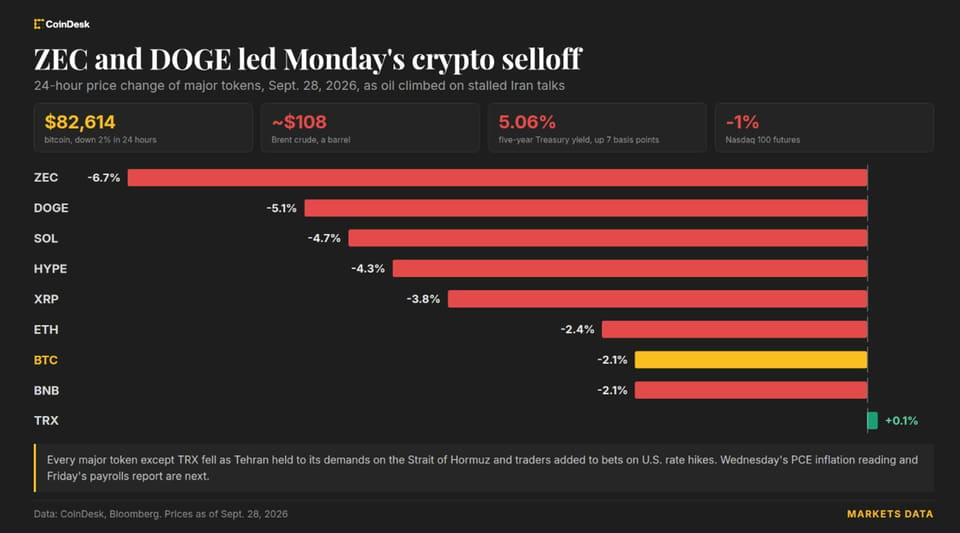
- ZEC fell 7% to just above $1,540 and DOGE lost 5% to about 9 cents; SOL and HYPE each dropped more than 4%
- Brent climbed toward $108 a barrel after Tehran refused to soften demands on reopening the Strait of Hormuz
- The five-year Treasury yield rose seven basis points to 5.06% ahead of Wednesday's PCE inflation reading
- Nasdaq 100 futures fell 1% and gold dropped by the most in a month
Bitcoin fell below $83,000 on Monday as stalled Iran talks and rising oil prices weighed on risk assets, CoinDesk reported. The largest cryptocurrency traded near $82,600, down 2% over 24 hours, according to CoinDesk data. The move came after a sharp four-day rally that had lifted prices to last week's highs.
Losses were broad across the market. ZEC dropped 7% to just above $1,540 and DOGE fell 5% to about 9 cents, while SOL and HYPE each lost more than 4%. Ether, BNB and XRP declined between 2% and 4%, and TRX held flat. The sell-off followed a liquidation wave of more than $500 million, according to Dan Khus, chief analyst at LVRG Research.
The trigger lay in energy markets. Brent crude climbed toward $108 a barrel after Tehran refused to soften its demands for reopening the Strait of Hormuz, CoinDesk reported. President Donald Trump sent mixed signals on further talks, adding to uncertainty. Higher oil prices feed directly into inflation expectations, which keeps pressure on central banks.
Crypto losses spread
Bond markets moved in the same direction. Treasuries fell across the curve, with the five-year yield up seven basis points to 5.06%, as traders added to bets on US rate hikes. The 10-year Treasury yield sits at its highest since 2007. Nasdaq 100 futures dropped 1%, chipmakers led declines in Asia and gold fell by the most in a month.
Khus told CoinDesk that bitcoin's pullback from last week's highs looked more like a risk-off squeeze than a change in trend. He pointed to profit-taking after the four-day rally and the liquidation wave. Those forces clashed with elevated yields and oil prices, which together keep inflation sticky and another Fed hike in play, he said.
Traders now await two US data releases. Wednesday brings the PCE reading, the inflation gauge the Federal Reserve watches most closely, followed by Friday's payrolls report. Khus said these events could push bitcoin back to reclaim the mid-$80,000s, or determine whether yields and energy keep risk assets on the back foot.
Oil and yields rise
The episode shows how tightly crypto is now tied to macro conditions. A geopolitical standoff over a key oil chokepoint, a steepening Treasury curve and looming inflation data all fed into a single day of losses across digital assets. Bitcoin's move below $83,000 came alongside weakness in equities and gold, suggesting a broad retreat from risk rather than a crypto-specific event.