 BTC
 ETH
 SOL
 XRP
 BNB
 TON
 DOT
 LTC
 POL
 HBAR
 NEAR
 ARB
 UNI
Arthur Cheong says tech selloff will be a crypto tailwind despite Binance hack
Defiance Capital's CEO expects money leaving US tech and AI stocks to flow back into crypto over the next six months, while Arthur Hayes says state AI bailouts will add liquidity.
Why it matters: Two prominent crypto investors argue that a downturn in tech and AI stocks, and any state rescue of AI firms, could push fresh liquidity into digital assets.

Key points
- Cheong expects the US tech and AI equities selloff to be a strong crypto tailwind over the next six months
- The Nasdaq 100 fell 3.4% on 30 October, with Intel down more than 29%, pushing the index into correction
- Arthur Hayes says the US government will print trillions to rescue AI companies, adding liquidity to crypto
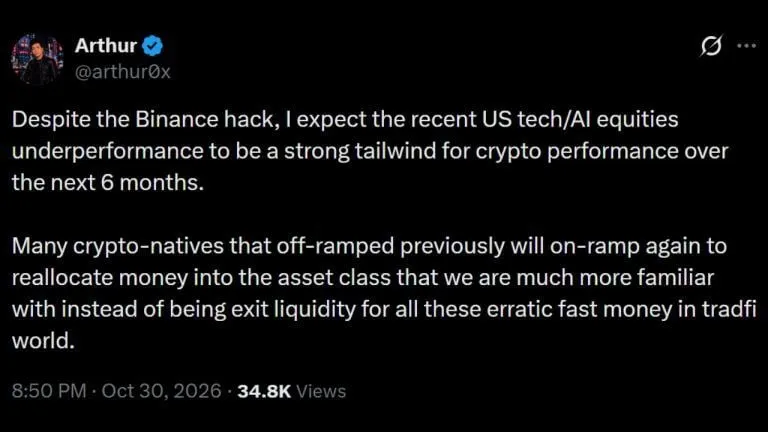
Arthur Cheong, CEO and CIO of Defiance Capital, says the recent selloff in US tech and AI stocks will act as a crypto tailwind over the next six months, even after the hack on Binance. The exchange's initial investigation points to a possible employee laptop compromise behind an incident with an estimated $6.3bn impact, which Bitcoin.com News describes as the largest security breach in digital assets history.
Cheong wrote on social media that tech and AI markets sold off sharply on 30 October, with the Nasdaq 100 down 3.4% in the afternoon and Intel falling more than 29%. The drop pushed the index into correction territory, meaning it had fallen more than 10% from its last record high.
In Cheong's view, a bursting AI bubble would push some of that liquidity out of tech and back into crypto. He argues that crypto-native investors who had off-ramped will return to the asset class they know rather than act as exit liquidity for fast money in traditional finance.
Live updates on NewsFeeds:AltcoinsDesk editor: Keshav Aggarwal (accountable for this page; this summary was not edited by hand)
How this was produced: an AI model wrote this summary of Bitcoin.com News’s report, which we credit and link above. Read our Editorial and AI policy. Spotted a mistake? See Corrections.
Not investment advice. Read the risk disclaimer.