Economist Per Bylund says AI will shift economy from employment to entrepreneurship
Austrian economist Per Bylund tells Bitcoin Magazine that AI is a statistical engine that cannot replace human vision, and that the shift will reshape jobs and value creation.
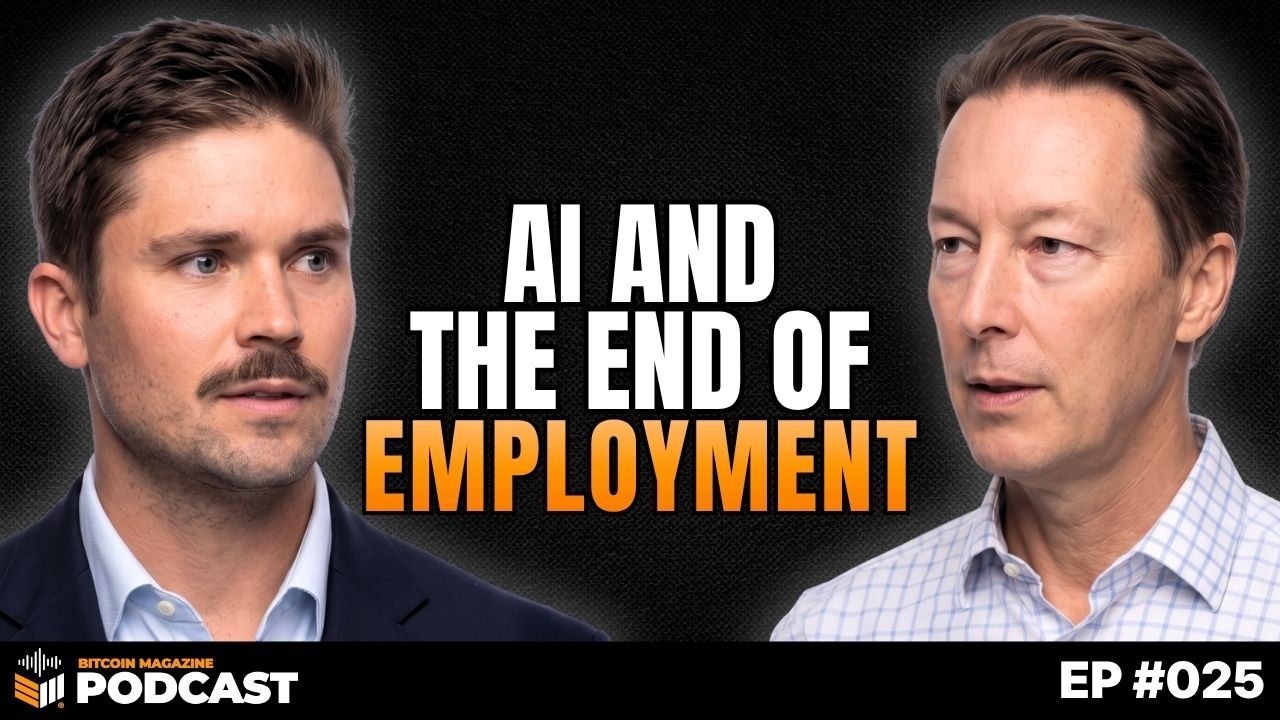
Key points
- Per Bylund is a Senior Fellow at the Mises Institute and joined Spencer Nichols for the discussion.
- Bylund argues AI is a statistical engine that improves efficiency but cannot imagine the future.
- He says the economy is moving from an employment economy to an entrepreneurship economy.
- The conversation covers invention versus innovation, regulation of AI, remote work and capital controls.
- The episode also discusses OpenAI, Anthropic and what Bylund calls regulatory capture in AI.
Austrian economist Per Bylund has argued that artificial intelligence will push the economy away from employment and towards entrepreneurship, in a video discussion published by Bitcoin Magazine. Bylund, a Senior Fellow at the Mises Institute, spoke with Spencer Nichols about how AI changes work and whether it can replace the human entrepreneur.
His central claim is that AI is a statistical engine. It can improve efficiency by drawing on existing data, but it cannot imagine the future in the way an entrepreneur must. That distinction, he says, is why human vision remains essential even as the technology spreads.
Bylund describes a shift from an employment economy to an entrepreneurship economy. In his account, this affects jobs, innovation and how value is created, as more people take on the role of spotting and pursuing opportunities rather than filling defined positions.
AI as a statistical engine
The discussion also turns to invention and innovation, with Bitcoin offered as a lesson for thinking about AI. Bylund separates the two ideas, suggesting that coming up with something new and making it work in the market are different tasks.
Regulation features in the conversation as well. Bylund asks whether regulators can keep up with the speed of AI, and the episode later examines OpenAI, Anthropic and what is described as regulatory capture in AI. Remote work, capital controls and the future of money are also covered.
Other themes include why every voluntary trade has two winners, and the position of the individual against the state in competition between the United States and China. Steel stockpiles, sugar subsidies and the lobbying behind protectionism are discussed as examples.
From employment to entrepreneurship
Bitcoin Magazine notes that the views expressed in the show belong to the participants and may not reflect the position of BTC Inc. or Bitcoin Magazine. The content is presented for informational and educational purposes only.